
Build a model-specific care plan: manuals, exposure, storage conditions, useful records and when to seek professional assessment.
A useful maintenance plan starts with the correct manual, not a universal number of days or rounds. Different designs, finishes, storage conditions and patterns of use call for different care. An article that promises one interval for every firearm is leaving out the information that makes the interval meaningful.
This guide helps you organise maintenance, recognise when a routine plan no longer applies, and decide what information to take to a manufacturer or qualified professional. It is not a disassembly guide, a repair procedure or a substitute for supervised safety instruction. Where your manual specifies a procedure or interval, follow that document rather than a general article.
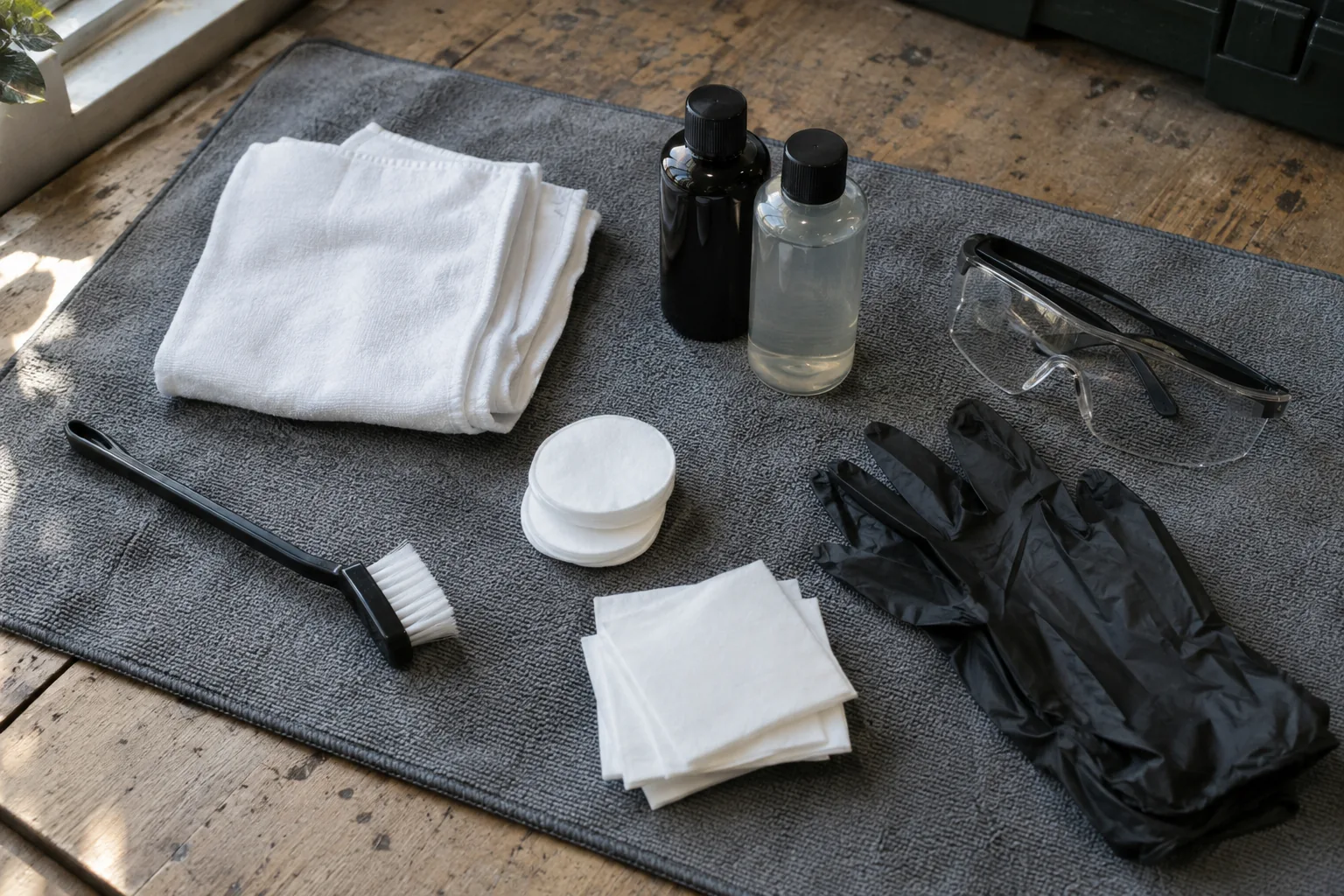
The short answer: use a model-specific schedule
Find the official instructions for the exact model and version. Read the care section together with the safety warnings, storage advice and any current service notices. Do not rely on a search-result snippet: it may omit the condition that makes an instruction applicable. The Ruger manual directory is one example of an official source; use the corresponding manufacturer for your equipment.
If a manual gives a specific interval, record it accurately, including any conditions attached. If it uses terms such as “after use” or “periodically,” do not convert those words into a made-up fixed number. Ask the manufacturer how the recommendation relates to the way the item is actually used and stored.
A schedule also needs an exception rule. An unusual exposure, visible deterioration, a fall, a reported malfunction or an applicable safety notice should prompt appropriate assessment. The existence of a calendar reminder does not mean you should wait until the reminder appears before addressing a problem.
Four things to record before choosing an interval
The exact equipment. Model, version and manual revision matter. Record where the manual came from so you can find updates later. You do not need to publish sensitive identifying details online to maintain a private care record.
The environment. A dry indoor cabinet and repeated exposure to damp conditions are not the same setting. Note unusual moisture, dust or other exposure factually. Avoid diagnosing damage from a vague description such as “a little dirty.”
The recent history. Record use, inspections and professional service in separate fields. “Cleaned” does not mean “professionally inspected,” and a quick external look is not equivalent to a full condition assessment.
The source of the recommendation. Keep a distinction between the manufacturer's instruction, a professional's advice for your particular item, and a suggestion from a general article. This prevents an informal comment from gradually becoming the household's supposed official procedure.

A planning table—not a cleaning recipe
| Situation | What to check | Sensible next step |
|---|---|---|
| Ordinary use under expected conditions | The model's documented care requirements | Follow the manufacturer's schedule and record completion |
| Damp, dusty or otherwise unusual exposure | Whether the manual addresses that exposure | Seek model-specific advice rather than applying a generic remedy |
| An item has been stored for a long time | Storage history, documentation and apparent deterioration | Arrange an appropriate condition assessment if anything is uncertain |
| A safety bulletin or recall may apply | The official notice and the exact product identification | Follow the maker's current instructions before further use |
| Something feels or behaves differently | A clear description of the change | Stop using the item and consult qualified support |
| The owner's experience is limited | Whether the procedure is understood and within the manual's scope | Obtain qualified instruction or service instead of experimenting |
The practical value of this table is triage. Some situations belong in a routine care log; others require professional assessment. It does not tell you how to clear a malfunction, dismantle a mechanism, adjust a component or test whether a repair worked. Those are not reasonable things to infer from a general maintenance article.
Build a workspace that supports careful decisions
A crowded, poorly lit surface makes it harder to keep track of instructions and materials. Before undertaking any manufacturer-permitted owner maintenance, make sure the area is appropriate, interruptions are controlled, and unauthorised people cannot gain access. Follow the firearm's documented safety preparation; never improvise based on familiarity with a different model.
Keep food and drink out of the work area. Separate maintenance materials from household toiletries and food containers. Use the product labels and safety data sheets to understand ventilation, protective equipment, incompatibilities and disposal requirements. A pleasant smell or a familiar brand is not evidence that a chemical is harmless.
Do not turn this into a shopping contest. Buying more brushes, solvents and specialist-looking tools does not resolve uncertainty about what is appropriate for a particular finish or component. A shorter, documented list of compatible materials is easier to manage than a drawer full of products chosen from unrelated videos.
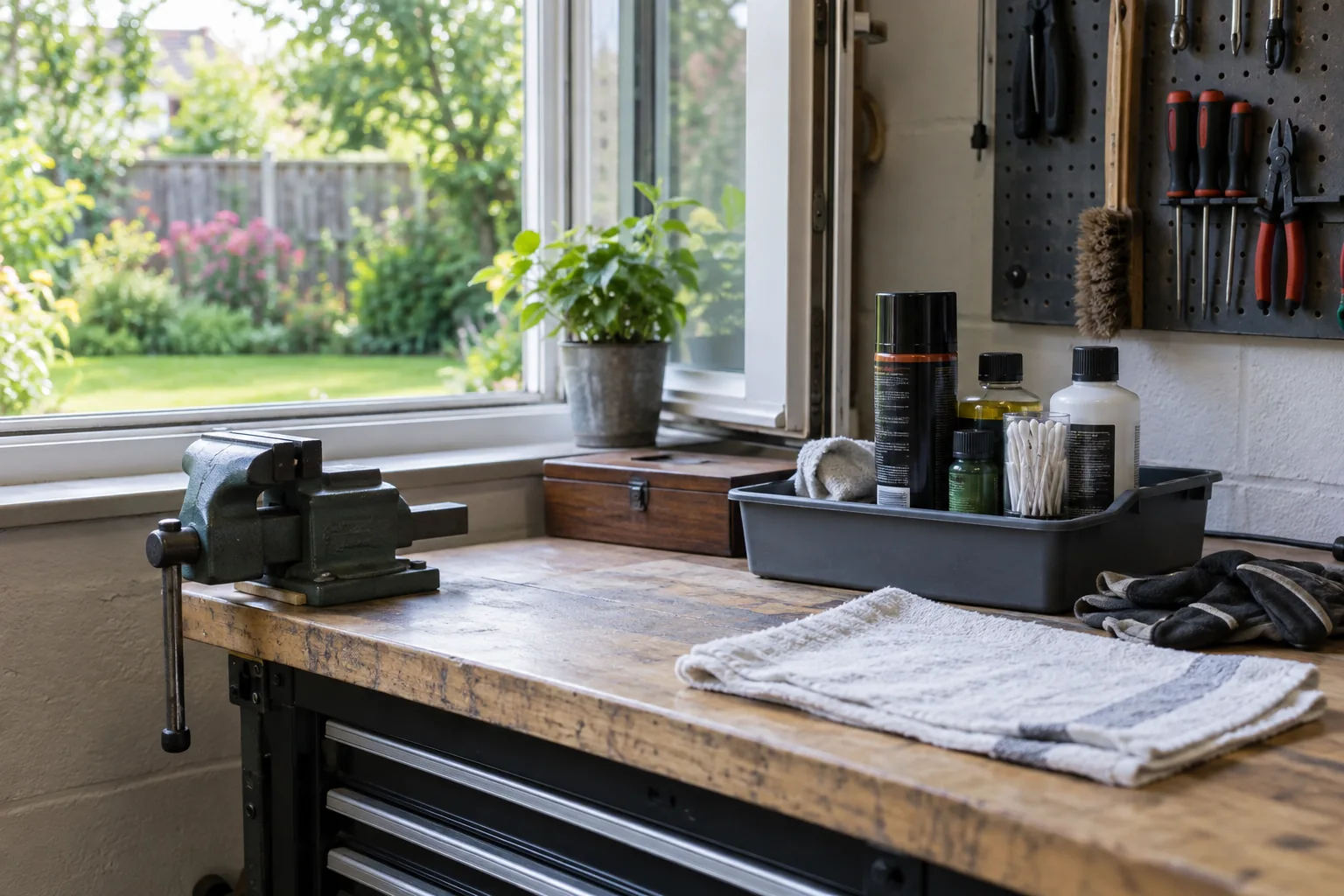
Product labels matter as much as the bottle's headline
A product may have a specific intended use, surface compatibility, storage temperature or disposal requirement. Check those details against the manufacturer's instructions. Do not assume that a household cleaner, automotive product or stronger solvent is an acceptable substitute simply because it appears to remove grime.
Avoid decanting materials into unlabelled containers. Preserve the original label and keep a record of the product used if professional service later becomes necessary. If the label is damaged or you no longer know what is in the container, uncertainty is a reason to stop using it—not a reason to test it on a small part of a firearm.
For disposal questions, consult the product's instructions and your local waste authority. The EPA household hazardous-waste guidance explains why leftover chemical products need appropriate handling. Local collection arrangements vary; a generic article cannot tell you that a particular liquid belongs down a drain or in ordinary household rubbish.
Storage is part of the maintenance picture
Care does not end when a work session is over. The place where equipment spends most of its time deserves attention too. Look for changes in the storage environment rather than assuming that a closed door means conditions are stable. A leak, damp wall, seasonal temperature change or damaged container can change the situation.
A humidity monitor can be useful for observing trends, but a single reading is not a certificate that all is well. Use any environmental targets supplied by the relevant manufacturer. Do not invent a universal humidity figure from an attractive display in a product photograph. Placement, instrument accuracy and changes over time all affect what the reading means.
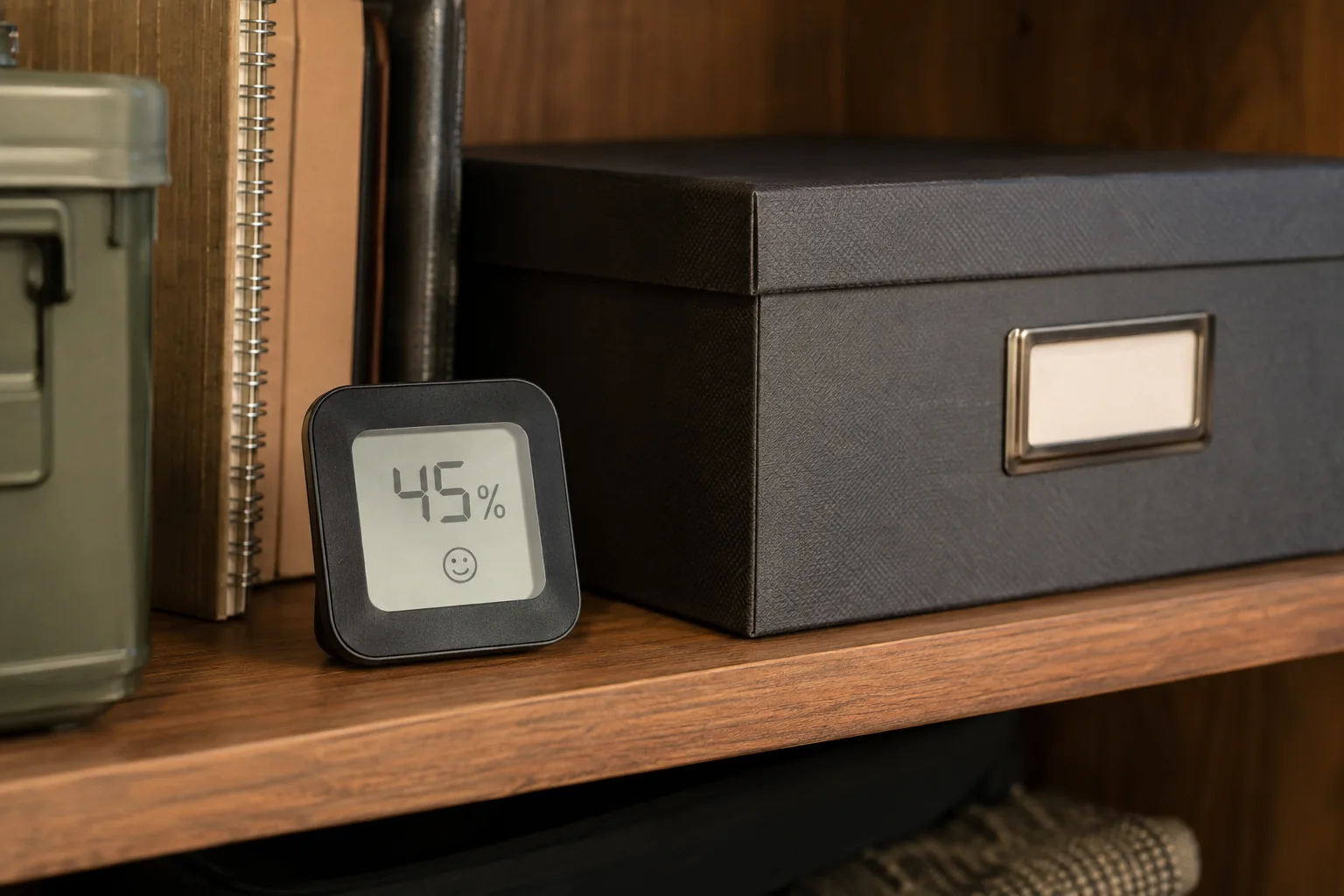
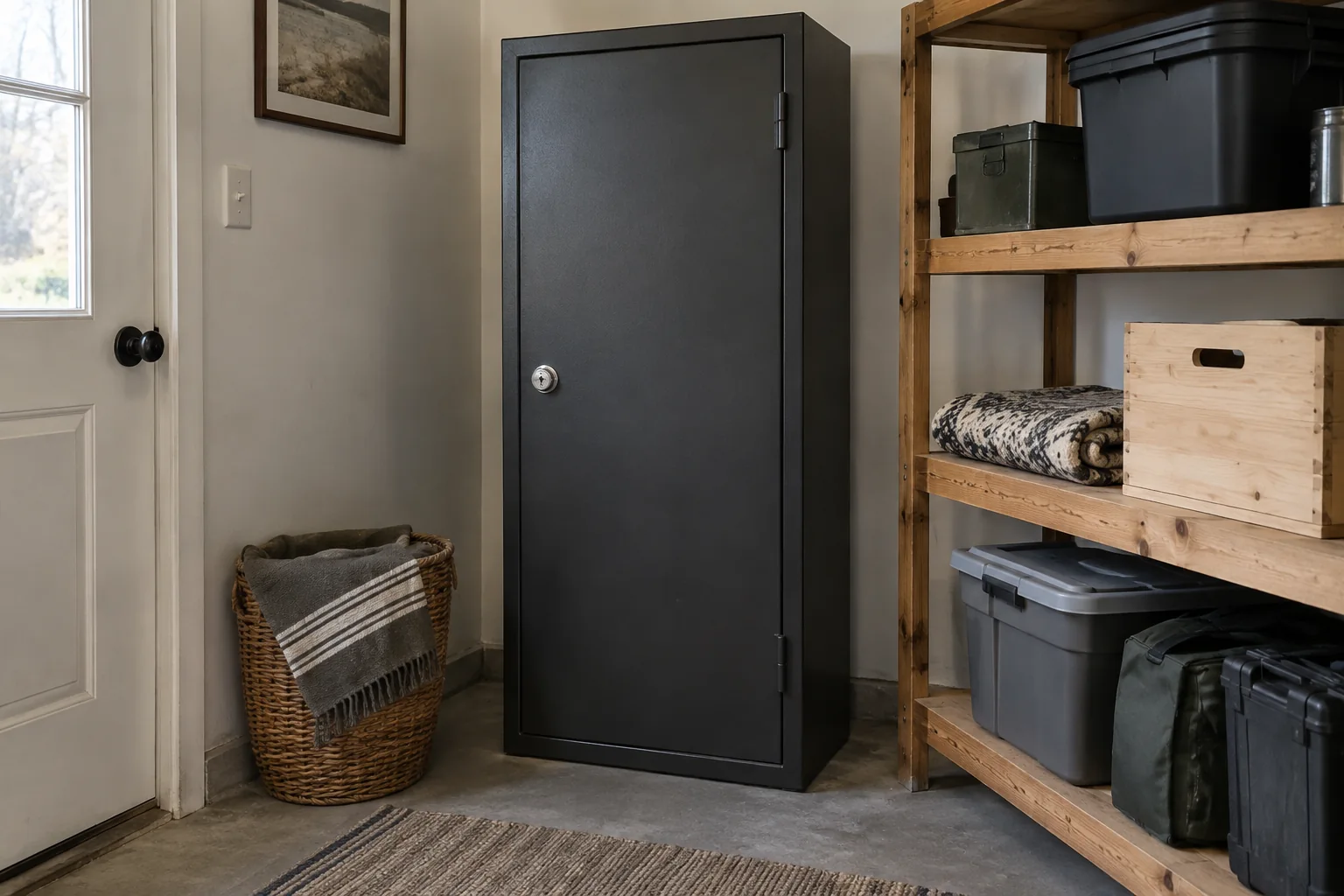
Secure storage and preservation are related but distinct. A container that protects a surface from dust is not automatically a device that prevents unauthorised access. Project ChildSafe's storage resources are a useful starting point for the access-control side of the decision. Consider both questions rather than assuming that a padded case solves them together.
Keep a maintenance log you will actually use
A short, consistent record is better than an elaborate template abandoned after one entry. Use a notebook or a private file with a few practical fields: date, reason for attention, reference consulted, materials used where relevant, observations, and the next action. Separate work done by the owner from service carried out by a professional.
Write observations rather than conclusions you cannot support. “Visible surface discolouration noticed after damp storage” is more useful to a professional than “probably harmless rust.” “New difficulty noticed; use stopped; manufacturer contacted” is clearer than a guessed diagnosis. Include a photograph only if it can be taken safely and does not expose private identifying information.
When a professional gives instructions, keep the written service record and ask about follow-up. Do not let a verbal recommendation become detached from the specific item and condition to which it applied. A service visit for one firearm does not automatically establish the correct schedule for every other item in the cabinet.
When routine cleaning is the wrong response
A damaged, unfamiliar or apparently modified firearm may need assessment rather than ordinary owner maintenance. The same applies if you are unsure whether a safety notice covers it, if the manual is unavailable, or if a change in behaviour has been reported. Stop using it and ask the manufacturer or an appropriately qualified professional what to do next.
Do not use cleaning as a catch-all explanation for a problem. “It probably just needs cleaning” is not a diagnosis. Nor should an article encourage extra disassembly, polishing, alterations, improvised lubricants or a test firing to settle uncertainty. Those actions can create a different problem while obscuring the original one.
When arranging service, ask how the provider wants the item prepared and delivered and what information is needed. Do not arrive with an unfamiliar item presented unexpectedly. Follow the provider's current instructions and applicable law, and keep any transport plan separate from the technical assessment itself.
Common questions
Should every firearm be cleaned on the same monthly schedule?
No single calendar rule suits every model and situation. A monthly reminder may help someone review a private care log, but it should not replace the actual manufacturer's requirements or an earlier response to unusual exposure or damage.
Does unused mean maintenance-free?
No. Storage conditions and elapsed time still matter. What should be inspected, how often, and whether professional service is appropriate depend on the item and its instructions. A long period without use is not proof of either good or poor condition.
Is a more aggressive cleaning product better?
Not as a general rule. Compatibility and instructions matter more than marketing language about strength. Use only appropriate materials and do not mix products or substitute a household chemical without manufacturer guidance.
What if a video contradicts the manual?
Do not treat the video as an override. Check whether it is actually about the same version, then ask the manufacturer to resolve the discrepancy. A confident presenter does not establish that a procedure applies to your item.
What is the most useful improvement I can make today?
Locate the correct current manual, create a short private record, and identify where to obtain qualified help. Those steps make later decisions more reliable without relying on a universal cleaning recipe. For related topics, see our action terminology guide and secure vehicle-storage comparison.