
Prepare a safe-moving survey, compare written quotes and organise temporary storage and a professional handover.
Moving a heavy safe is a logistics job, not a test of how many friends can be persuaded to lift it. The risks include crushing injuries, an unstable load, damage to the building, and damage that affects the safe itself. The useful homeowner's task is to organise the information, access and responsibilities before a specialist arrives.
This guide covers that planning work: identifying the safe, documenting the route, comparing written quotes, arranging secure temporary storage and checking the completed installation. It does not provide a do-it-yourself lifting, rigging, stair-moving or door-removal procedure. If the load, structure or route is uncertain, professional assessment comes before an attempted move.
Get the facts about the safe first
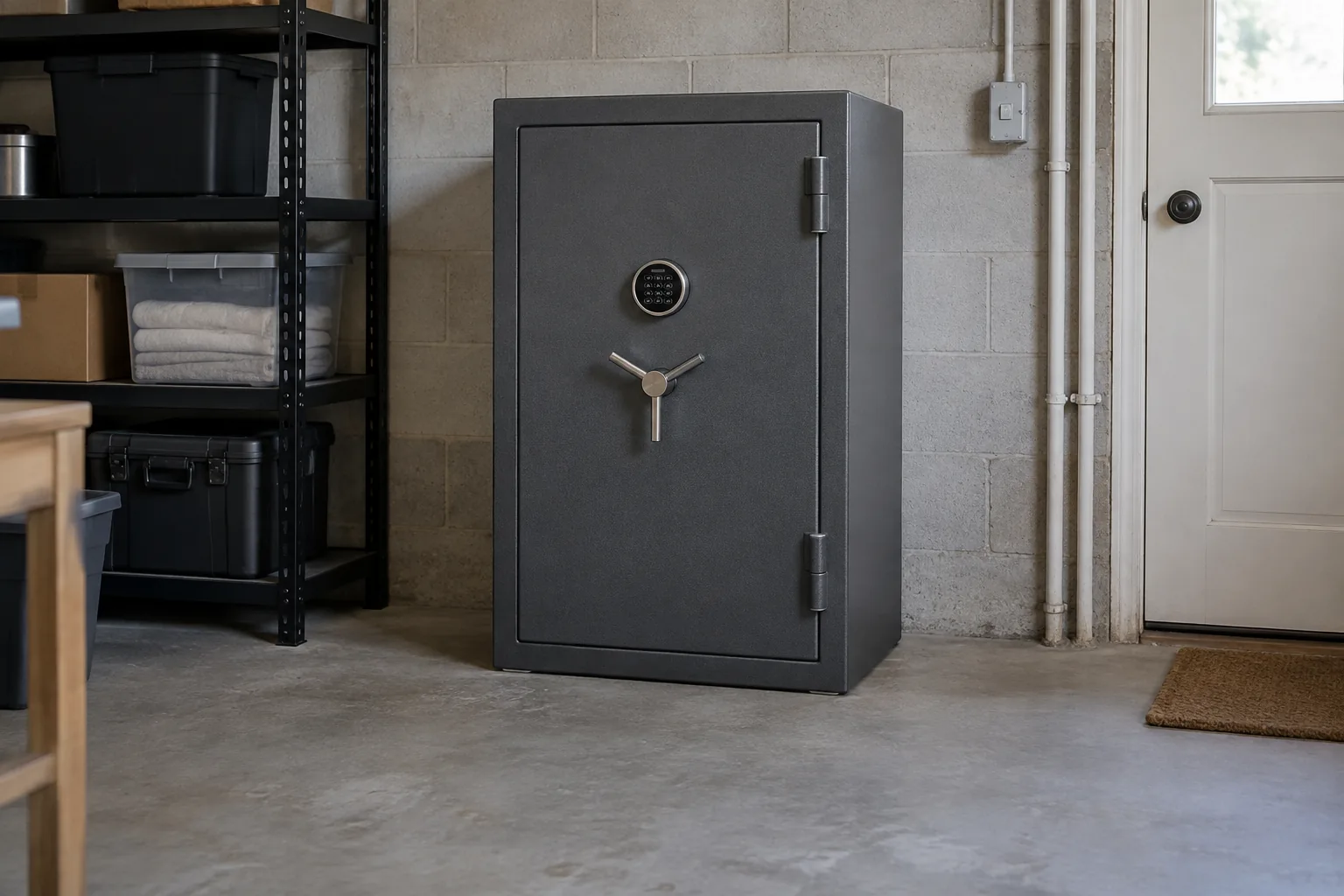
Find the manufacturer's model information and documented weight. Distinguish an empty weight from an estimate that includes contents, packaging or accessories. If the label is missing or the safe has been altered, say so when requesting a survey. Guessing can produce the wrong equipment, staffing or access plan.
Record external dimensions, including any projections that matter to access. Note the current location, the intended destination and whether the safe is fixed in place. The mover should decide what needs inspection and what measurements they require. A homeowner's measurements support the survey; they do not replace the mover's assessment.
Keep private information private. A quotation request normally does not require a public inventory of valuable contents or a photograph showing an access code. Send only the information genuinely needed through the provider's verified contact channel. Ask how photographs and access details will be used if the service requires them.
Survey the whole route
The route begins before the safe reaches the first doorway and ends after it is correctly positioned at the destination. Record both addresses' access conditions for the mover: parking, surface changes, thresholds, narrow turns, stairs, lifts and restricted hours. A short distance within one house can be more complex than a longer journey between two easy ground-floor locations.
Do not assume that a clear doorway means the rest of the route is adequate. Turning space, landings and changes of level may be the real constraints. If floors, stairs or a lift's capacity are uncertain, ask the appropriate qualified professional or building manager to resolve that uncertainty. The safe's mass is only part of the loading question; people and equipment also matter.
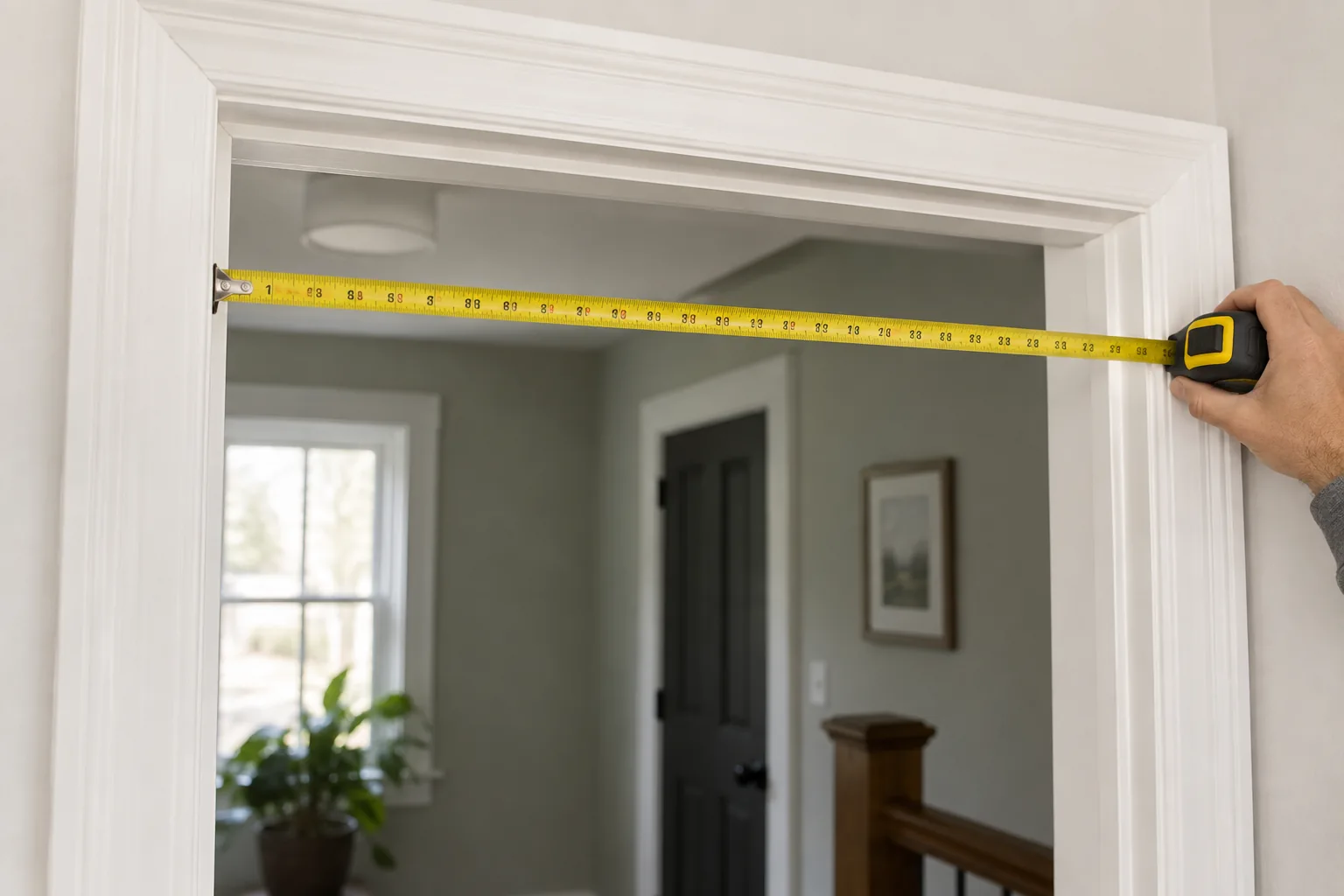
A useful route record is descriptive rather than prescriptive. “One narrow turn after the entrance, photographs attached” is more helpful than “a standard trolley will be fine.” Leave the choice of equipment, handling method and crew to the specialist responsible for the work. Do not try to design a rigging solution from a general article.
Why specialist experience matters
Liberty Safe recommends experienced authorised safe movers and warns about injury and property damage from an inadequately planned move. That advice is useful even when your safe is made by another company: ask its manufacturer which support or delivery network is appropriate for the exact model.
Experience should be specific. A company that moves ordinary household furniture may or may not be equipped for a particular safe and route. Ask who will carry out the work, whether subcontractors are involved, what the survey covers and which situations the provider will decline. A willingness to stop when conditions differ from the survey is a strength, not an inconvenience to negotiate away.
Do not treat a photograph of heavy-duty equipment as proof of competence. The OSHA material-handling resources describe the broader hazards associated with lifting and moving loads. For your project, the relevant issue is whether the responsible contractor has assessed the actual job and can explain the agreed scope.
Compare quotes on the same scope
A single price can conceal very different services. One quote may end at the kerb, another may include placement, and another may cover removal and reinstallation of an existing unit. Ask for the destination and completion standard in writing so you are comparing the same job.
| Item to clarify | Why it changes the quotation |
|---|---|
| Survey and route assessment | Unusual access may require a visit before pricing |
| Collection and delivery points | Kerbside delivery is not placement in the final room |
| Stairs, lifts and difficult turns | Complexity is not captured by distance alone |
| Existing fixing or installation work | Removal and reinstatement may be separate services |
| Floor and wall protection | Responsibilities should be agreed before arrival |
| Storage or rescheduling | Delays can introduce additional handling or charges |
| Insurance and claims procedure | Coverage, limits and exclusions need clarification |
| Disposal or removal of an old safe | A replacement project may involve two separate jobs |
Do not accept “fully insured” as the complete answer to an insurance question. Ask what damage is covered, which party is responsible, what limits or exclusions apply, and how a claim must be reported. Your own insurer or building manager may also have relevant requirements. This is a planning checklist, not an interpretation of an insurance policy.
Plan for contents separately
The safe and its contents are different responsibilities. Agree with the provider what must be removed and when. Arrange lawful, secure temporary storage before the safe becomes unavailable. Do not leave firearms, valuables or sensitive documents unsecured while attention is focused on the heavy object.
The mover may have restrictions on what they transport. Ask directly rather than assuming that a safe-removal service includes the contents. If another specialist or service is needed, coordinate the sequence in advance. A gap between removal and installation can last longer than expected if access, weather or delivery timing changes.
Maintain access control throughout the transition. Keep children, visitors and pets away from the work area. Designate one adult to communicate with the crew so that conflicting requests do not interrupt the plan. These are organisational tasks; they do not make a homeowner part of the lifting team.
What not to improvise on moving day
Do not remove a safe door merely because an online comment says it makes the unit lighter. Door construction and the resulting handling risks vary. Liberty's guidance on safe removal notes that door removal can create pinch hazards and is not a task for an inexperienced owner.
Do not start loosening fixings, modifying a route or providing improvised ramps unless the responsible qualified provider has arranged the appropriate work. A late discovery about the building or installation should lead to reassessment. It should not lead to a hurried experiment because a vehicle is waiting outside.
Never try to catch, steady or arrest a falling heavy safe. Stay clear of the handling area and follow the crew's exclusion instructions. If the operation appears uncontrolled, move away and communicate with the responsible professional. Protecting people is more important than saving a door frame, floor finish or delivery appointment.
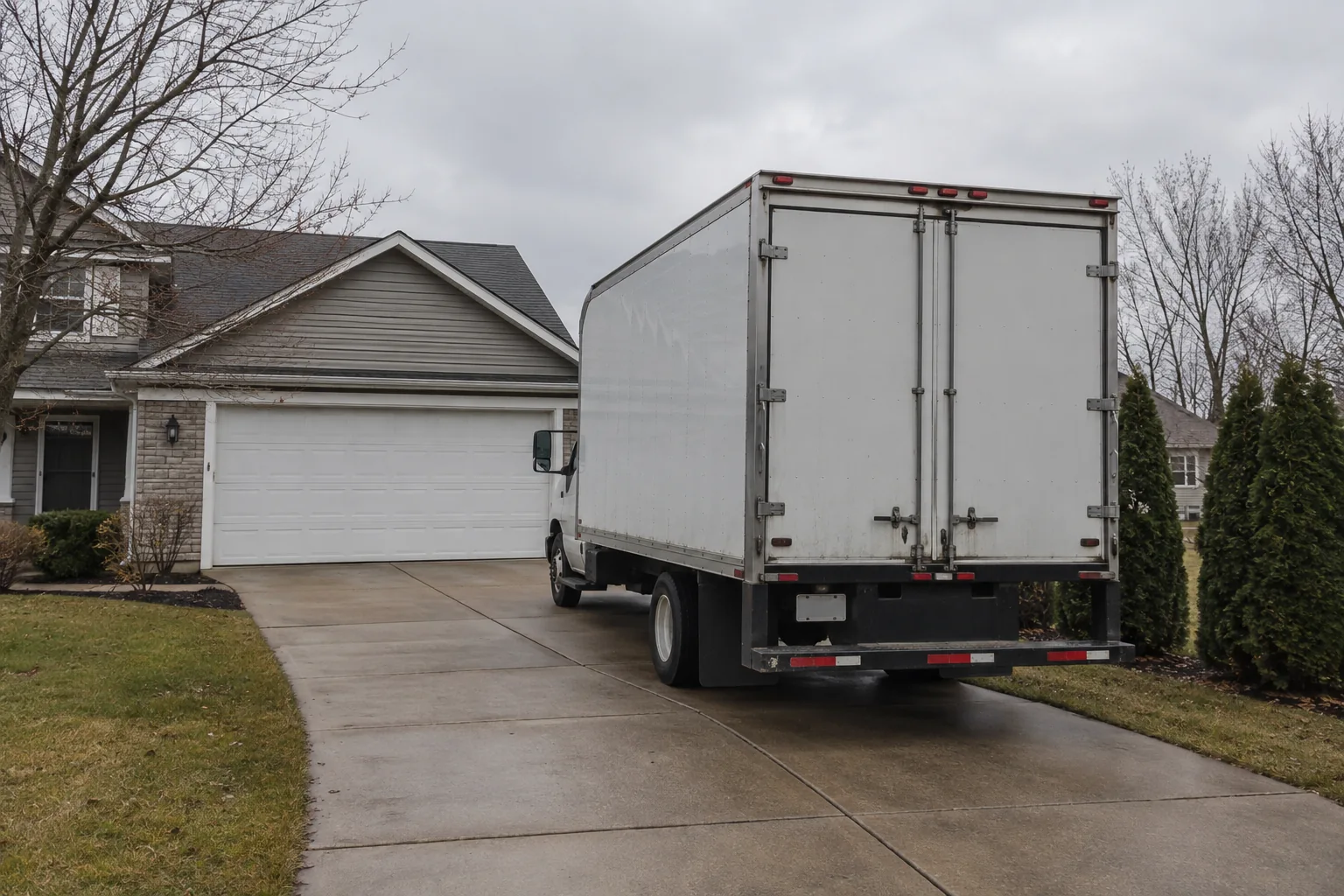
Agree what “finished” means
The job is not necessarily complete when the safe reaches the room. Placement, any required installation work and the handover need to match the manufacturer's instructions and the written scope. Do not assume that a moved safe automatically retains every claimed level of protection regardless of how it is reinstalled.
At handover, review visible condition and the documentation with the provider. Ask the provider to address any unexpected damage, new difficulty with the door or uncertainty about the installation. Do not compensate for a problem by forcing a control, adding a makeshift support or ignoring a changed fit.
Keep the invoice, service record and relevant photographs privately. Record who completed installation work and which instructions were followed. If a later service issue arises, those records are more useful than a memory that “the delivery people said it was fine.” Check that temporary storage arrangements can now be ended safely and lawfully.
A realistic way to budget
Avoid treating old online price examples as a current quotation. Safe model, route, location, service scope and local availability can all change the price. Obtain written quotes from suitable providers using the same information, and ask which circumstances may change the agreed charge.
If you are moving house, compare relocation with the complete cost of replacement and installation—not just the retail price of a new safe. Include disposal or removal of the old unit where relevant. The lower headline amount may not be the lower total cost, and neither option is worthwhile if it depends on an unsafe handling plan.
Give the project enough lead time for surveys, building permissions where needed and secure temporary arrangements. Paying for an appropriate assessment can prevent a failed delivery or a rushed decision. A smaller, well-defined project is easier to complete reliably than an inexpensive quote based on missing information.
Frequently asked questions
Can I move it myself if it is only going a few feet?
Distance does not remove the risks of instability, crushing or damage. Have the exact job assessed. This guide does not provide a weight threshold below which an inexperienced DIY move is automatically safe.
Should the door be removed?
That is a model-specific decision for the qualified provider, not a generic preparation step. Do not attempt it simply to reduce a quoted weight.
Can the safe go upstairs?
That depends on the structure, route, load and installation requirements. A photograph of the room or the dimensions of a doorway cannot establish structural suitability. Obtain appropriate professional assessment before booking the placement.
What should I do first?
Identify the safe, collect its documentation and request an informed survey or quotation. Then agree the route, responsibilities and temporary storage plan in writing. For related reading, see the care-planning guide and the vehicle-storage comparison.