
Compare holders and lockboxes by purpose, documented fit, passenger safety, evidence and complete ownership cost.
A car holster, a magnetic mount and a locked storage container solve different problems. A holder may organise an object or keep it in a particular position. That does not make it a secure storage device, prove that it is safe in a collision, or establish that using it is lawful in your circumstances.
The most useful purchase decision begins with the job you actually need done. Are you comparing equipment for temporary secure storage during a lawful journey, or have you been drawn to advertising about convenient access? Those are not the same brief. This guide concentrates on storage, fit, passenger safety and evidence—not tactical access, product hype or an unverified list of “best” models.
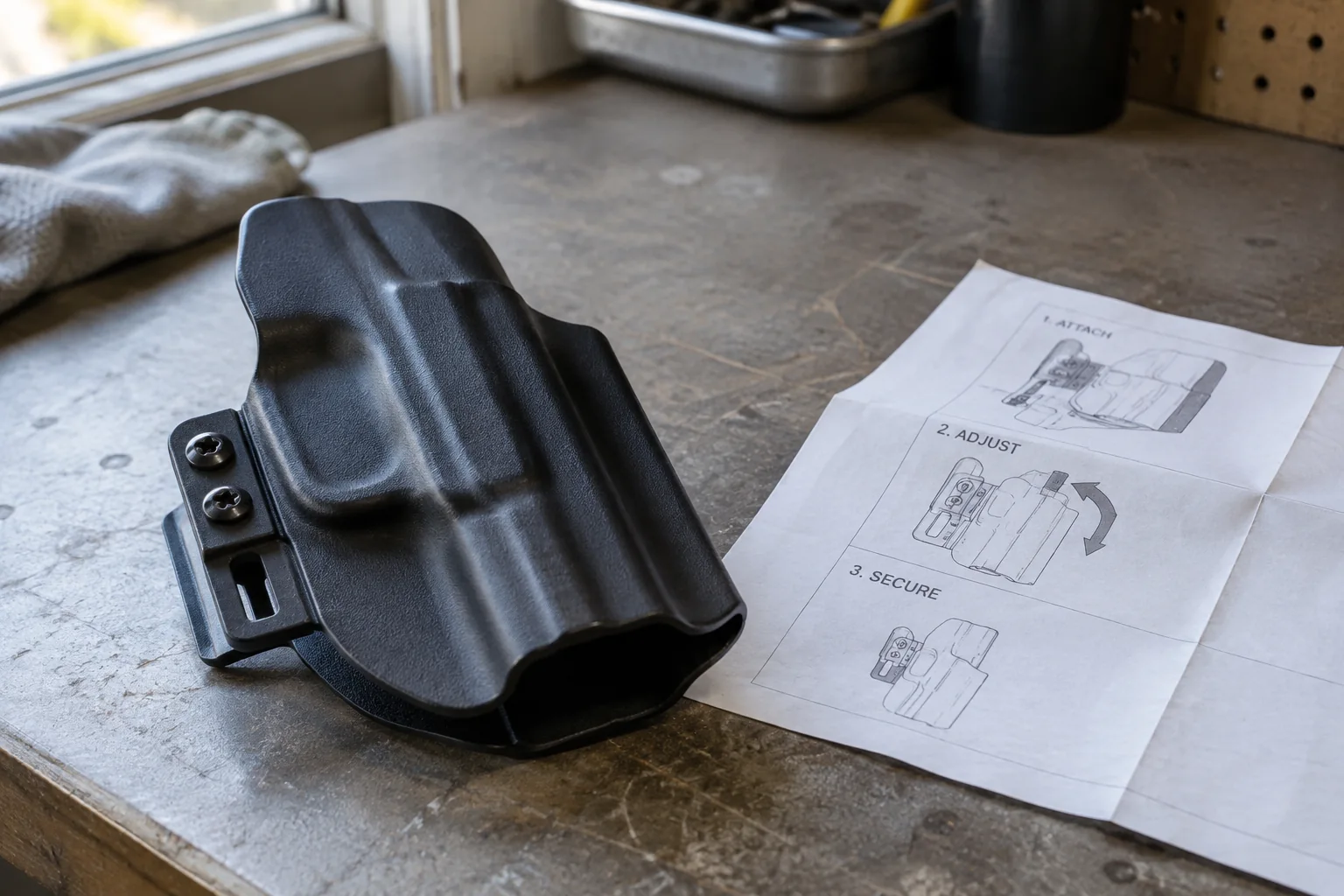
Begin with the storage problem, not the accessory
Write down the situations the purchase must address: the kind of vehicle, who travels in it, whether the vehicle is ever unattended, and how temporary storage will end when the journey ends. Keep lawful possession and transport requirements separate from the product specification. An accessory listing cannot determine your legal obligations.
If the plan depends on leaving a firearm in a vehicle routinely, reconsider the plan before shopping. Project ChildSafe's vehicle guidance highlights theft from unattended vehicles and the importance of secure storage. A vehicle should not become a permanent substitute for appropriate storage at home or another lawful destination.
The distinction also changes how you read a review. A reviewer who praises convenience has not necessarily examined resistance to unauthorised access, compatibility with vehicle safety systems, or the manufacturer's limitations. A useful review makes those gaps visible instead of hiding them behind a star rating.
Compare the categories honestly
| Category | What it is designed to do | Question it does not answer on its own |
|---|---|---|
| Holster or open holder | Retain an item in a particular form or position | Is access prevented when nobody is supervising it? |
| Magnetic mount | Hold a compatible object against a magnetic surface | Is it a security container or a tested crash-restraint system? |
| Soft case | Protect and organise contents during handling | What level of access control or theft resistance does it provide? |
| Lockable portable case | Add a locking closure and protective enclosure | Is the exact case suitable for the intended situation and law? |
| Vehicle-specific lockbox | Provide an enclosed storage solution for a stated vehicle application | Is the installation documented, compatible and supported? |
No row in this table is a blanket endorsement. Products vary within each category. A claimed pull strength for a magnet, for example, is not the same test as a collision, and a lock on a lid does not establish resistance to every kind of attack. Ask what the claim actually measures.
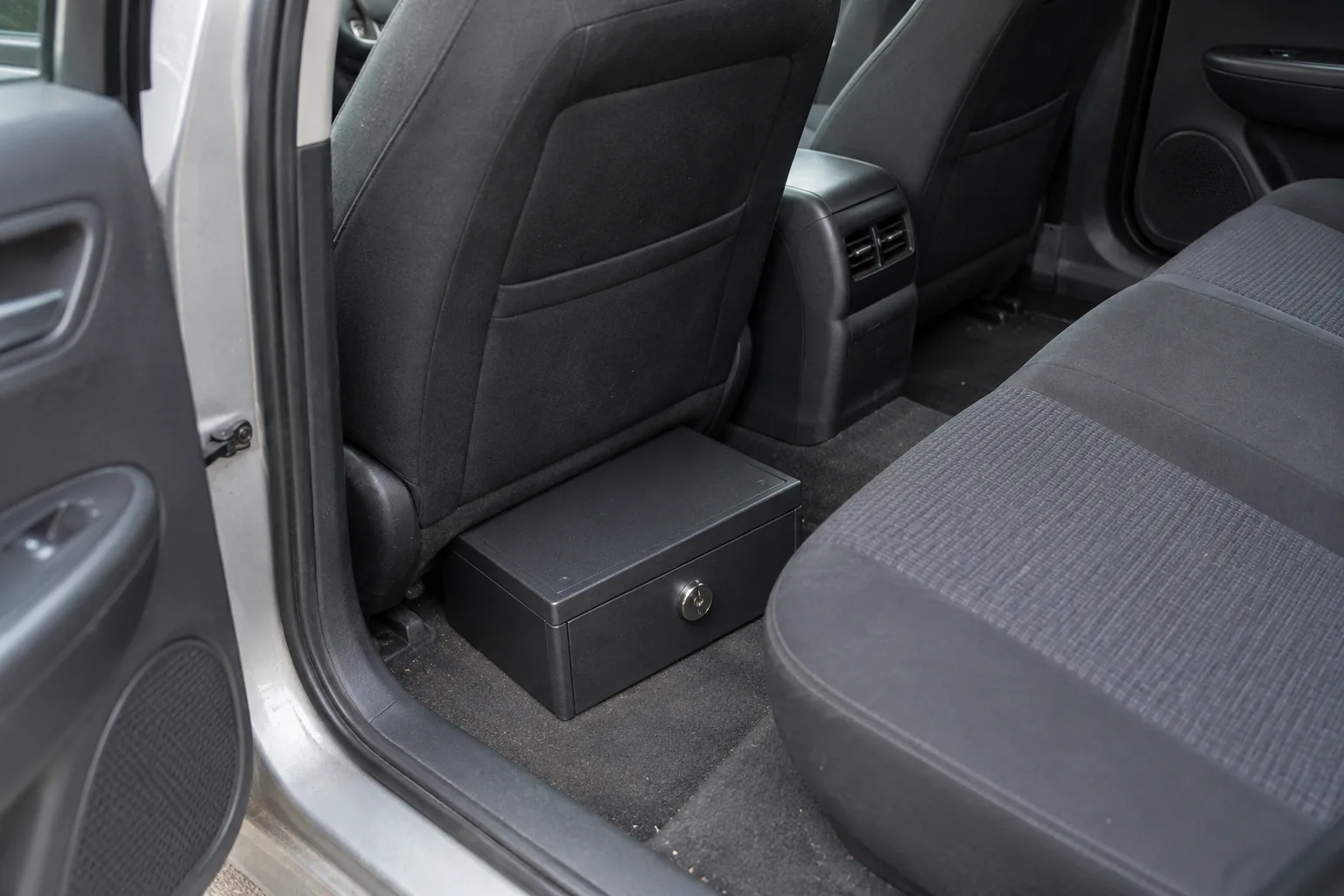
Fit includes the people who use the car
A storage accessory must coexist with the vehicle as used, not merely fit into an empty cabin for a photograph. Consider the usual seating positions, seat movement, passenger access and the need to leave controls and footwells clear. A box that appears unobtrusive when the passenger seat is empty may create a problem when someone sits there.
Ask the accessory manufacturer for compatibility with the exact year, body style and seating configuration. “Fits most cars” is a starting claim, not a fitment certificate. Trim levels, power-seat equipment and factory storage arrangements can change the available space. Rental, leased and work vehicles may impose additional restrictions on accessories or modifications.
Do not improvise around a conflict with a seat, belt or vehicle safety feature. NHTSA explains the role of frontal and side airbags; for the location of systems in your particular car and accessory restrictions, consult the vehicle manual and the manufacturer. A storage installation must not depend on disabling a safety feature.
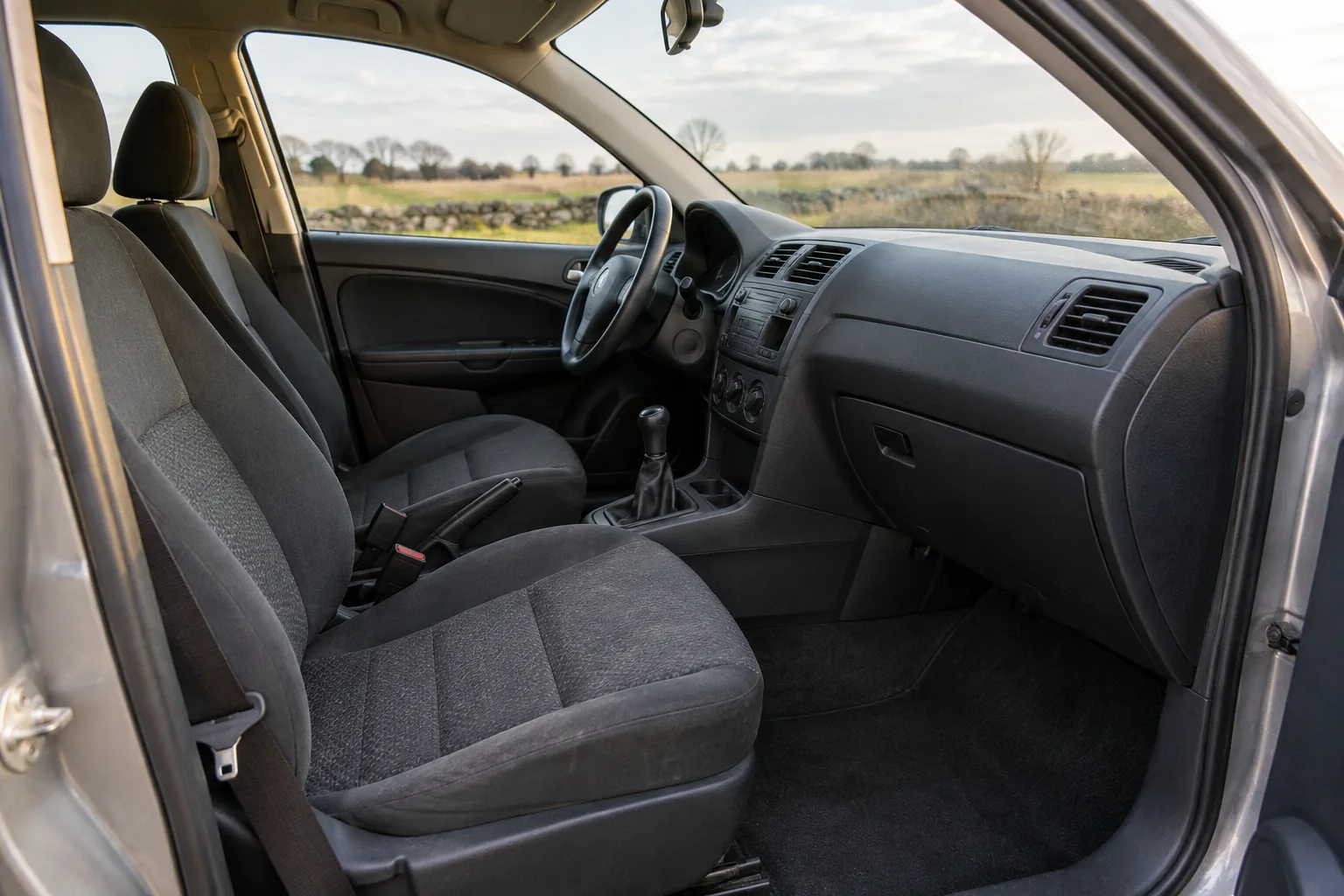
Questions to send before ordering
- Which exact vehicles and configurations does this model support?
- Where are the written installation instructions and limitations?
- Does the supplier require a qualified installer?
- What documentation supports any stated security or testing claim?
- What happens if the product does not fit without interference?
- Are replacement parts, keys and long-term support available through a verified channel?
Keep the answers with the order record. A seller's message is not the same thing as an official manufacturer's specification, but it is still better than trying to reconstruct a promise after the packaging has been discarded. Where the answer remains vague, leave the question unresolved rather than converting a sales phrase into an assumption.
What a credible product comparison should show
A strong comparison separates verified specifications, editorial judgements and untested claims. Dimensions should identify whether they are external or usable internal measurements. A compatibility statement should name the relevant version. A security rating should identify the standard, testing organisation, model covered and scope of the claim, if such a rating is being advertised.
Price needs context too. The price of a box may omit vehicle-specific parts, professional installation, delivery, replacement keys or a return charge. Those costs can change a decision without making the cheapest or most expensive product automatically preferable. Compare the complete documented arrangement, not just the headline price.
This article does not rank named products because it has not conducted a controlled comparison of current models. That is an important boundary, not a missing star score. “Best for the money” would require a defined budget, use case, current prices and defensible evidence. A criteria-based shortlist is more honest and more reusable.

Temporary storage needs an end point
Think through the whole journey rather than a single moment when the vehicle is parked. Where will the item be lawfully stored before departure and after arrival? What happens if plans change? Who has access to the vehicle and the storage device? A product can be part of a plan, but it cannot make an incomplete plan complete.
Avoid treating a hidden position as equivalent to access control. Concealment, locking, suitable attachment and the decision not to leave valuables unattended address different concerns. No reasonable product description should promise that a vehicle becomes theft-proof. Nor does the absence of a theft so far demonstrate that a particular arrangement is suitable.
The practical recommendation is to minimise reliance on unattended vehicle storage and follow current official safety guidance and applicable law when temporary storage is unavoidable. Do not publish details of your regular storage location, access arrangements or travel routine in a product review or public forum.
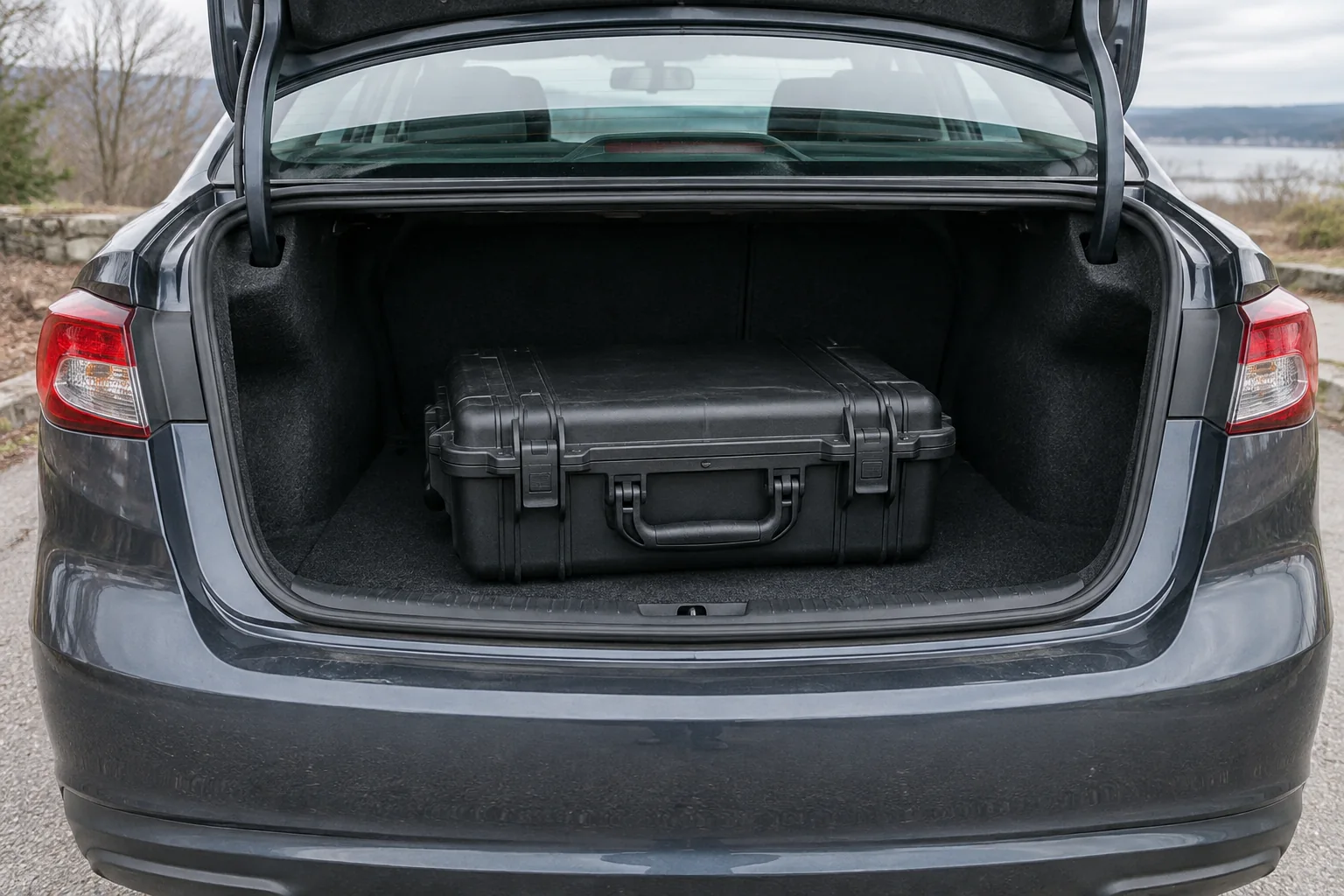
Legal questions: ask the right one
“Is a car holster legal?” is too broad to answer responsibly for every reader. The relevant rules may depend on location, lawful possession, the circumstances of transport, who can access the item, and other details. Product advertising does not override those rules. Check current official guidance for the actual route and situation; obtain qualified legal advice if uncertainty affects your decision.
Be especially careful with old articles that present one state's practice as a nationwide rule. Also distinguish a proposed rule from an effective rule. The ATF interstate-transport rulemaking notice is an example of why the document's status matters; a proposal must not be quoted as a final universal permission.
This guide intentionally does not supply a one-sentence legal recipe. A short answer that omits exceptions can be less useful than a clear explanation of what to verify. Record the date and the official source of any guidance you rely on, rather than saving only a screenshot of an undated summary.

A simple shortlist worksheet
For each candidate, record six fields: intended purpose, exact compatibility, written installation requirements, evidence for security claims, total cost, and unresolved questions. Mark an answer “not verified” if the documentation is missing. Do not average an unknown safety-related point into an otherwise attractive score.
Then compare only products intended for the same task. An open holder and an enclosed vehicle-specific box may both appear in a retailer's search results, but comparing them as interchangeable bargain options is misleading. A smaller shortlist of genuinely relevant products is more useful than eleven superficially different accessories.
Before the return period expires, resolve fitment and documentation with the supplier or qualified installer. Do not carry out improvised stress tests, modify the product, or infer security from the fact that it feels sturdy. Preserve the instructions and receipt so that future support, recalls or vehicle changes can be handled sensibly.
Frequently asked questions
Does a magnetic mount replace a lockbox?
No. Holding an object and preventing unauthorised access are different functions. Evaluate the product for its stated purpose and do not infer storage security from a holding-force claim.
Can a product advertised as universal be assumed to fit?
No. Check the exact vehicle configuration and the written limitations. If installation would interfere with normal seating, controls or safety systems, resolve the conflict before use rather than improvising a workaround.
Is a locked vehicle enough by itself?
Do not treat the vehicle's door lock as a complete secure-storage plan. Consult current official storage guidance and applicable rules for the situation, and avoid using an unattended vehicle for routine long-term storage.
What if I have a pickup or an SUV?
The same questions apply, but the layout changes. Read the pickup storage guide for cabin and load-bed considerations, or the vehicle comparison for differences between sedans, hatchbacks and other vehicle types.