
A pickup-specific comparison of cab, under-seat and load-bed options, with questions to resolve before purchase.
Pickup storage is a packaging problem as well as a security problem. A regular cab, an extended cab and a crew cab do not offer the same space. A truck used alone on a weekend is not the same as a family vehicle with rear-seat passengers or a work truck carrying tools every day. Start with that real layout before comparing accessories.
This guide replaces an old “top eleven” list with a more useful decision framework. It distinguishes racks from enclosed storage, examines cabin and load-bed trade-offs, and explains which specifications need evidence. It does not claim to have crash-tested products, recommend tactical access arrangements, or provide instructions for installing firearm mounts.
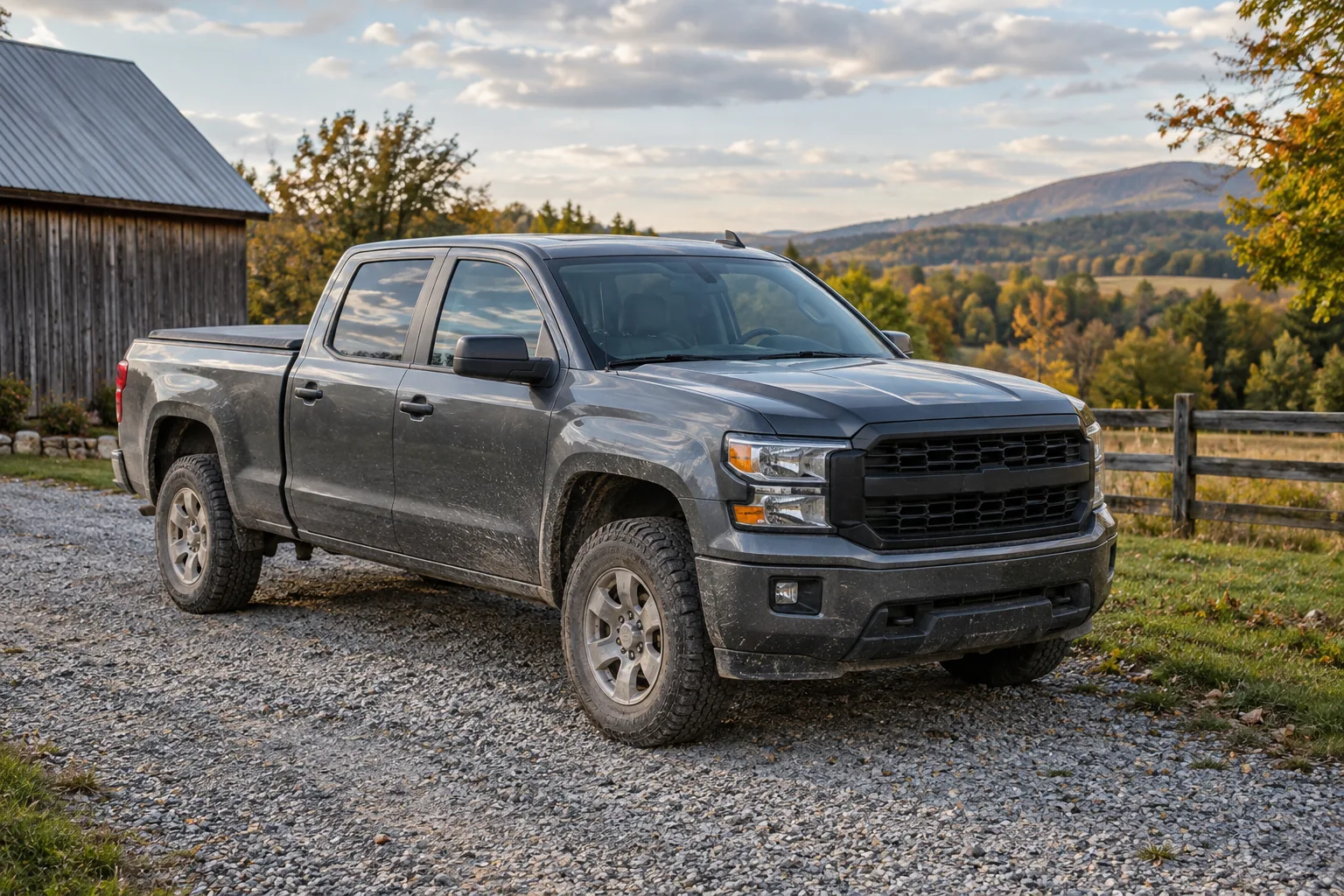
Record the exact truck configuration
Write down the year, make, model, cab style, seat configuration and relevant factory equipment. A product fitted to one version in a photograph may not fit another version carrying the same model name. Rear-seat mechanisms, under-seat contours and factory storage can differ even when the outside of the trucks looks similar.
Then describe how the truck is normally used. Does someone sit in the rear? Are seats regularly folded? Is access to a factory tool kit needed? Is the vehicle shared with another adult? Does the load bed carry bulky or dirty equipment? These questions identify conflicts that a bare measurement cannot reveal.
Do not use a passenger-free promotional image as the fitment test. The storage arrangement must work when the truck is being used normally. The supplier should provide written compatibility and limitations for the exact vehicle. If the answer is only “universal,” ask what has actually been checked and what the buyer remains responsible for verifying.
A rack is not the same thing as secure storage
An open rack organises or supports an item. An enclosed locking system has a different purpose. A soft case adds another kind of protection. Retailers often put these products in the same category, but that does not make them interchangeable solutions to unauthorised access or theft.
For temporary vehicle storage, consult Project ChildSafe's vehicle-safety resources. Its emphasis on theft prevention is a useful counterweight to advertising focused entirely on convenience. The first question is whether vehicle storage is necessary at all, not which accessory makes it easiest to leave something behind.
| Storage format | Practical attraction | What to verify |
|---|---|---|
| Open rack | Organisation and a defined position | Intended use, access control limitations and documented compatibility |
| Soft protective case | Portability and surface protection | Whether it offers any meaningful locking or security function |
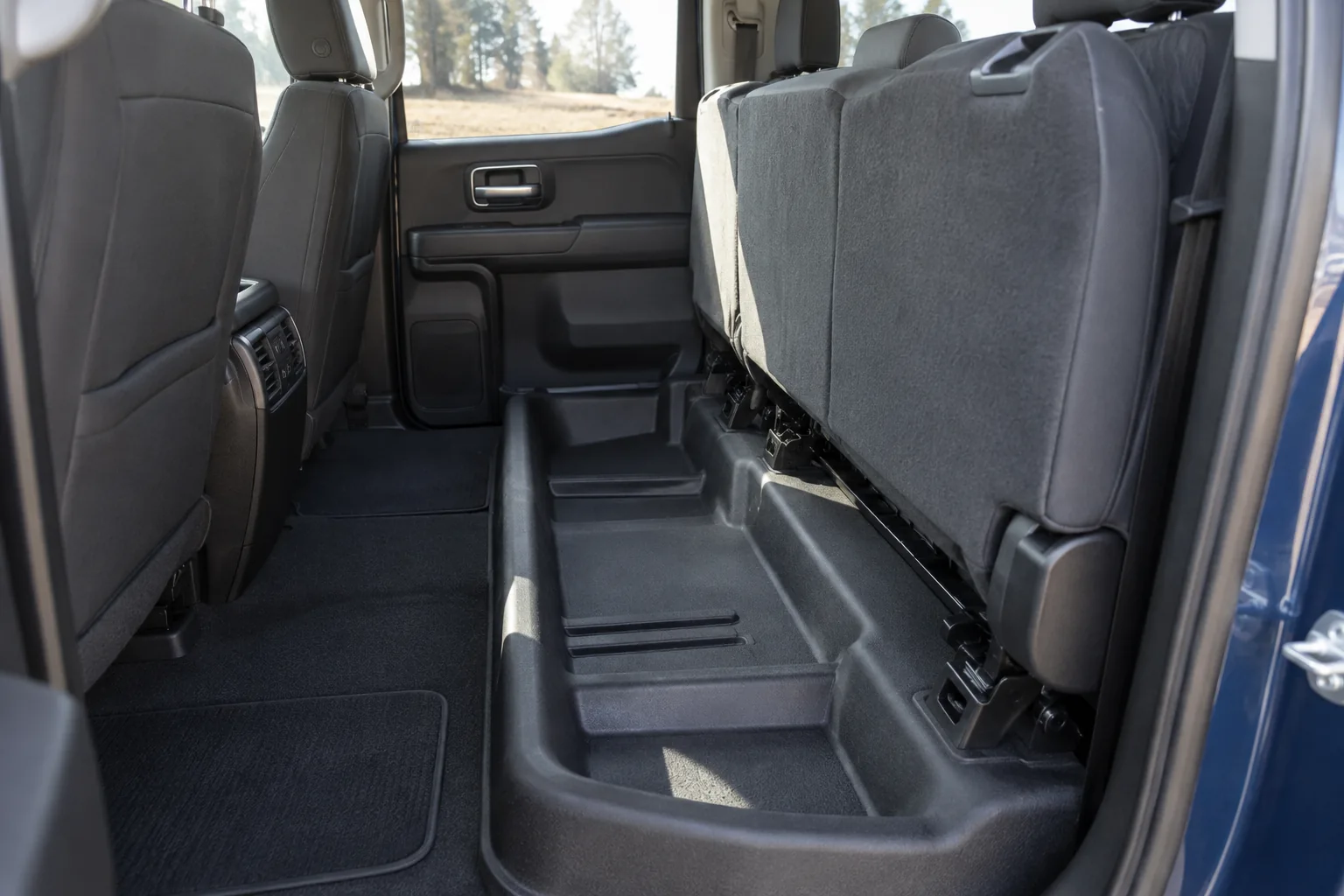
| Under-seat enclosure | Use of otherwise awkward cabin space | Exact seat configuration, factory equipment access and installation requirements |
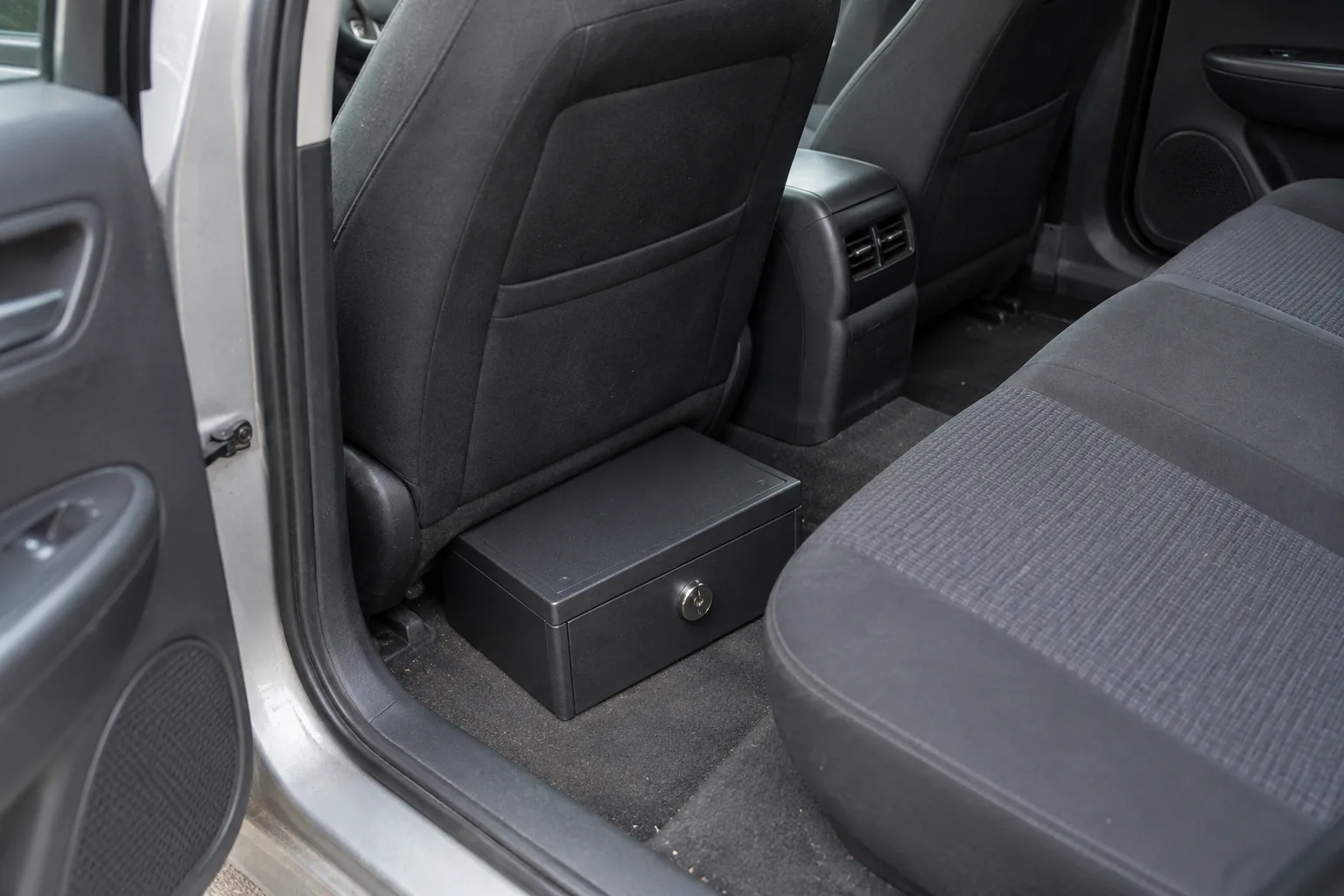
| Cabin lockbox | A separate enclosed storage space | Passenger clearance, approved fitment and supported security claims |
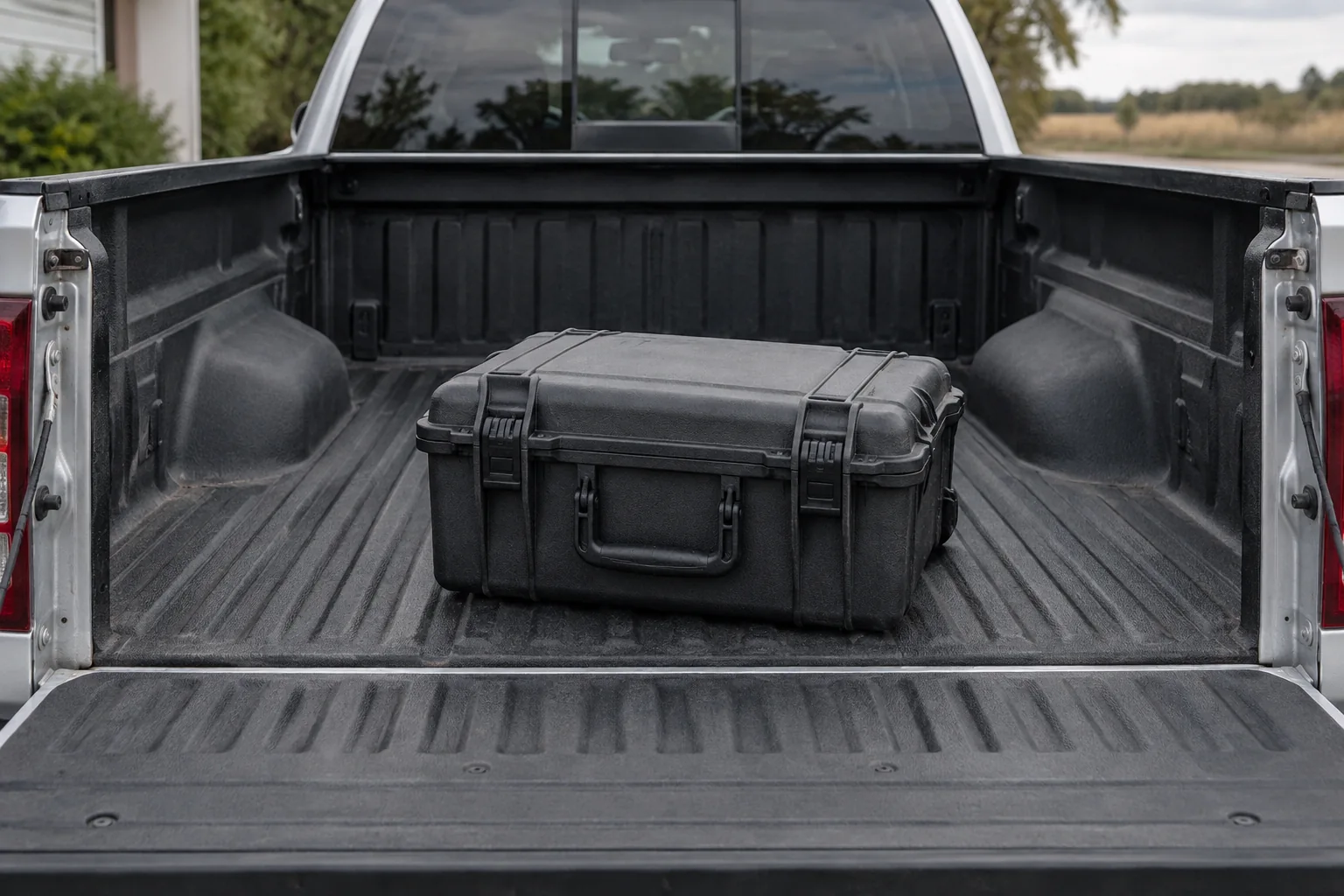
| Load-bed case or enclosure | Separation from ordinary cabin space | Exposure, access, compatibility and complete installation documentation |
This table compares questions, not winners. For example, separating an item from the cabin may introduce weather or loading considerations. Using cabin space may instead introduce passenger and vehicle-system conflicts. Neither location is automatically the right answer for every truck or every legal situation.
Under-seat storage: check the whole seat's use
Under-seat products can look tidy because they follow the shape of the interior. The fitment question, however, includes normal seat movement, access to factory equipment and the way occupants enter and leave. The fact that a lid closes while a seat is folded up does not establish compatibility in every normal configuration.
Ask the supplier to identify the tested or supported truck version and to provide instructions before purchase. If a professional installation is required, include it in the cost comparison. Do not accept a solution that depends on altering seat or restraint components without appropriate manufacturer-approved work.
The NHTSA airbag information explains why cabin safety systems deserve attention. The exact system layout and restrictions come from the truck's own documentation. An accessory should not interfere with the original safety equipment, and the absence of an obvious warning on a retailer's page is not proof of compatibility.
Load-bed storage: separate the claims
A covered load bed is not automatically dry, secure or suitable for every container. “Weather-resistant,” “waterproof,” “lockable” and “theft-resistant” are different claims. Ask for the meaning of each claim and its limitations for the exact product. Do not infer a security rating from a rugged appearance or a weather seal.
Consider ordinary truck use as part of the decision. Other cargo may need space, loading access may change, and the storage product may affect the use of a cover or existing equipment. The supplier should explain compatibility rather than leaving the buyer to resolve conflicts after delivery.
Check how maintenance and inspection are handled. A product intended for an exposed environment should have clear care instructions and support arrangements. If a seal, lock or mounting component needs replacement later, find out whether the manufacturer supplies it. A low purchase price can be poor value if the entire system becomes unusable when a small part wears out.
Read security and testing claims precisely
When a product advertises a rating, ask which standard it refers to, who performed the assessment, which exact model was covered, and whether the claim applies to the complete installed system or only one component. A strong lock does not by itself establish the performance of the enclosure or the installation.
Likewise, a stated capacity or holding force does not necessarily describe performance during a collision. Avoid inventing that connection. If a supplier makes a crash-related claim, it should be able to identify the supporting documentation and the conditions under which the claim is valid.
A claim can be too broad even when one underlying measurement is genuine. “Steel construction,” for instance, describes a material; it does not tell you everything about design, installation or access resistance. Good comparison notes preserve the exact claim rather than turning a specification into a promise that the product cannot support.
Calculate the complete ownership cost
Compare the enclosure or rack price together with any vehicle-specific kit, professional installation, delivery and applicable return costs. Ask about replacement keys, parts and the process if the truck is sold or replaced. A product tied to one cab design may not move economically to the next vehicle.
Keep warranty questions separate from security questions. A warranty may address defects but not theft, misuse, vehicle damage or all installation work. Read the actual terms and ask the supplier to resolve ambiguity before ordering. If insurance is relevant, ask the insurer what evidence it requires rather than assuming that the product name is sufficient.

A useful shortlist has a small number of well-matched options. Each should have the same intended purpose, a verified fitment answer and a documented installation route. Remove a candidate if a critical question remains unanswered; do not compensate for missing safety information by giving extra points for colour, capacity or a discount.
Plan for passengers, shared use and changing routines
The same truck can serve different roles during the week. A workday arrangement may become unsuitable when rear passengers travel, bulky cargo is loaded or another person drives. Document any limitations clearly and reconsider the arrangement when the vehicle's use changes.
Avoid sharing security details in public reviews. A useful review can explain whether instructions were clear and support was responsive without revealing where keys are kept, when the truck is unattended or what valuable contents are normally present. If you need support, use a verified private channel and share only the necessary information.
A responsible plan also has an end point. Temporary storage during a lawful journey should not quietly become permanent storage because the product is convenient. Review what happens on arrival and how any lawful, secure destination arrangement is restored. Equipment should support a routine that is already thought through.

Questions that prevent a poor purchase
Is an open rack suitable whenever transport is lawful?
Not necessarily. The law, product purpose, vehicle compatibility and access-control needs are separate questions. An article cannot establish all of them merely by naming the vehicle or saying that the firearm is being transported.
Is under-seat storage always more secure than a load-bed case?
No universal ranking is defensible without the exact products, installation and circumstances. Compare documented performance and limitations rather than choosing purely by location.
Can I transfer an accessory to a different truck?
Only rely on compatibility that the manufacturer actually supports. A change of year, seat layout or cab can matter. Recheck instructions and any installation requirements instead of assuming that the old fit proves the new fit.
What if I cannot get a clear answer from the seller?
Ask the manufacturer or a qualified installer. If a critical compatibility or safety question remains unresolved, do not treat silence as approval. There is no need to force a purchase from an incomplete shortlist.
Where should I go next?
Read the car-holster and lockbox comparison for the distinction between holders and secure enclosures. The broader vehicle-storage guide compares body styles and explains how to keep transport planning separate from product selection.